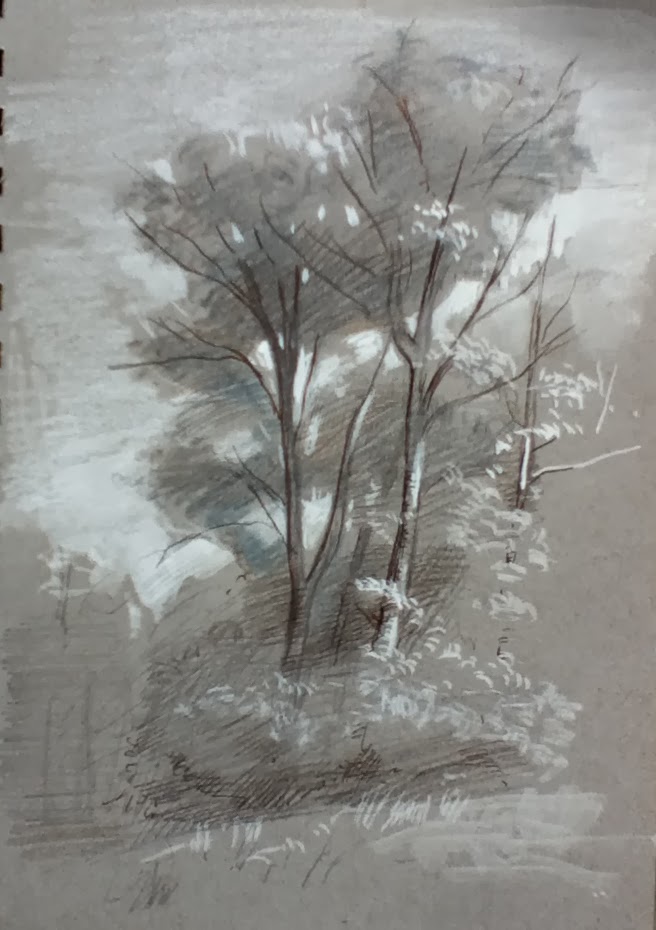
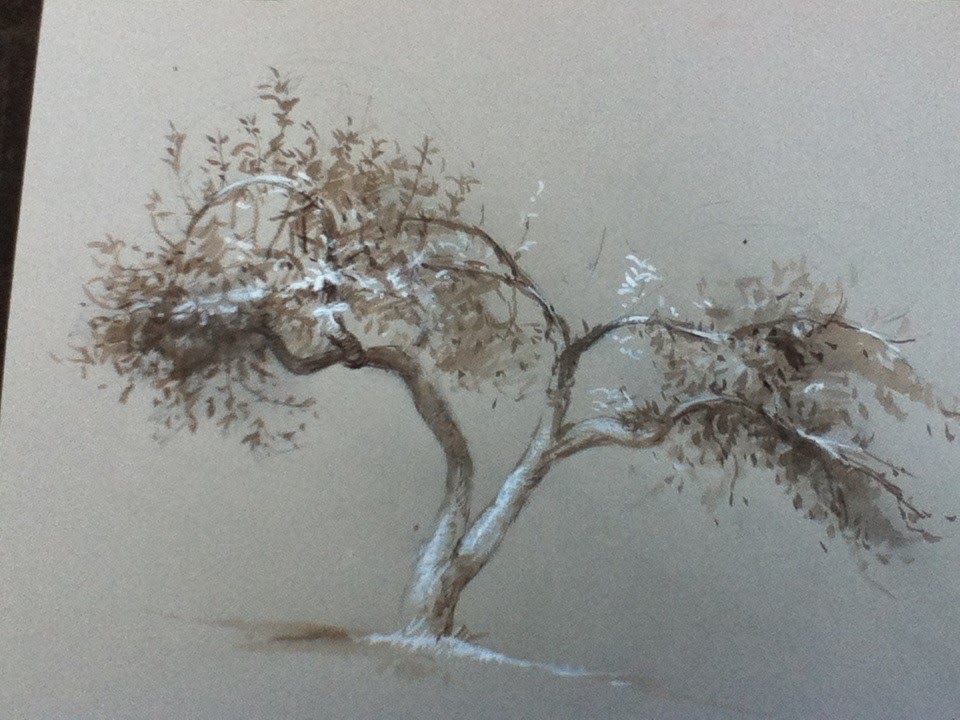
Tuesday, February 04, 2014

New Venues For Selling Paintings

With the internet available to most people, selling paintings has opened up for many artists.  Artists can open their own "stores" on  websites such as Etsy or Daily Paintworks and not have to depend on brick and motar galleries for sales.  If you are a prolific artist, this is an excellent option.  Many "Painting a Day" painters have become almost legends, with articles in major news papers and huge followings.  Julian Merrow-Smith and Duane Keiser were pioneers in this movement.  Often, these painters put their works up for auction, with the starting bid being $100.  The famous daily painters not only produce a painting a day, but actually sell a painting a day. That's impressive!!  This seemed pretty appealing to me.  I paint a lot, and when you paint a lot, you need to sell a lot.  Otherwise, your studio begins to fill up, and paintings stack along the floors, fill up the walls, line the shelves, etc. If you paint a lot, maybe you can relate to this, too.   Additionally, framing all of these paintings, so that they can sell in galleries, is very expensive.  Artists that sell works through these "store" websites, can offer the paintings unframed, and that is great.  It also makes shipping lighter and everything more affordable.  Obviously, I have been rethinking how I sell my work.

With all of these pluses, I decided to try a new venue..Daily Paintworks.  I perused the website, and it was  amazing to me to see how many artists were selling.  It was fun to discover  new artists, searching through pages of work.  There are tons of artists out there quietly working away, working hard, and  honing their skills.  After all, the more you paint, the better you will get! 

So far, I just uploaded a few pieces to see if anything happens...if anyone even notices.  If you have a minute, take a look at the site...there's a little badge on the side here.  Since I paint many little watercolor/gouache studies, I will probably try to sell a bunch of these, besides small oil paintings and demonstrations from classes I teach.  Instead of trying the auction thing, though, I just set some reasonable prices that fit in.  The people that seem to sell consistently have smaller paintings that are almost always the same size, either 6"x6" or 5"x7".  I will go that route, too.  It keeps art affordable, and I think everyone needs a little art in their lives!  

Sunday, February 02, 2014

Oscar Anderson Easel Revisited

Jack Winslow using the Anderson Easel 

Jack Winslow plein air painting in 2008 

Close-up from underneath of clips holding the palettes sticks to back leg

Close-up of the back leg and palette sticks from the back

The label

Close-up of one of the legs, showing how you can adjust height

Close-up of the clip when it is locked in place

Close-up of the clip unlocked

In closing the easel, the 2 palette sticks, together with the back leg, clip together

Palette sticks and back leg from back
Back in 2008, I posted a few pictures of my husband, Jack, and me out landscape painting (See July 5, 2008 post).  Jack was using a large easel, commonly known as the "Gloucester Easel".  It was made by Oscar Anderson, a MA landscape painter active in  the  early to mid nineteen hundreds.  The easel we own belonged to Thomas Curtin, another artist who painted  in Cambridge, VT, and who passed away in 1977.   The Anderson easel is primarily useful for large outdoor paintings.  Since I generally work pretty small, I tend to use the Open Box M, now, because everything can be stuffed into one small, light backpack, but Jack uses the Anderson when he works on large plein air pieces.  His paintbox, as well as his premixed strings fit nicely on the "tabletop" that is formed by the V-shaped palette sticks. 

 I received an email from another artist asking for close-ups of the mechanisms.  Since other artists might be interested, as well, I took these photos.  I hope they are helpful.

Because of the resurgence of outdoor landscape painting, and creating larger plein air pieces, new companies are making easels that are similar in design.  The newer easels are larger,  and they are price around $350-$400.  One of those companies is Take-it-Easel from Vermont.  http://www.takeiteasel.com/index#nice1

Jack's finished painting of Mt. Mansfield 

Saturday, February 01, 2014

2014 - Workshops in Florida

Sunset painting in Bonita Springs using the prismatic palette

Plein Air study - afternoon

Plein Air painting at the beach 

Plein Air study 

Plein Air study - Bonita Springs

Plein Air study in watercolor/gouache

Plein Air study in watercolor/gouache

Karen painting at the beach
This year, I will be teaching 2 workshops in Florida.  One will be for the Art Center of Bonita Springs, March 17-19, http://www.artcenterbonita.org/workshop.htm. The other will be hosted by Florida artist, Deborah Elmquist, at her studio and surrounding landscape in Port Orange, April 4-7 http://deborahelmquist.com/workshops

  Both workshops are combination Still Life and Plein Air Painting.  In the landscape portion, I will be teaching students to mix and use a premixed landscape palette (often referred to as the prismatic palette).  This palette allows artist to interpret and paint atmospheric perspective, quickly, which is very helpful in the fast-changing weather and light effects of outdoor studies. 

 The Bonita Springs class is scheduled for one full day indoor still life (from life) and two full days outdoor landscape painting .  The Port Orange class has the option to take either Still Life (afternoon) or Landscape (morning) separately, or the student can take both for the full day.  

In all the classes, I will be demonstrating each day, as well as helping students individually at their easels, or as a group.  All of my demonstrations are interactive, so that students will understand "why" certain colors and values work, and I show them "how" to simplify by massing into value shapes.  For both classes, students need to bring an outdoor easel.   The classes are intended for oils, but the principles can be applied in any medium.  So, watercolor, gouache, and pastel are an option. 

Friday, January 03, 2014

Museum Visits - 2013


In December, I went down to the Museum of Fine Art in Boston to see the Sargent Watercolor Exhibit.  The exhibit showed over 100 paintings from the combined collections of the Brooklyn Museum and the  MFA in Boston.  The works were from many years, and they did not disappoint!  Painted primarily for his own enjoyment, they give us a view into his private life - studies of friends and family on outings and hikes in the country, or plein air paintings from trips.  

Contrary to what many modern watercolorists believe, John Singer Sargent was not overly concerned with preserving the white of the paper, and he used white paint when needed.   Sargent used a combination of transparent and opaque watercolors (gouache)  to create his dazzling light effects.  The opaque watercolor, or white gouache, was used both under and over transparent washes to hold his lights or build stronger planes of light.  In addition to the gouache, he experimented with wax resist, which could hold a light, and when painted over, the resist could produce interesting textures.  In the second painting down, you can see some of the wax resist to the left of the figure.  In the last photo down, I love the woman on the right, where the sunlight and shadow on her legs are so simply rendered, yet so effective.  Sargent was wonderful at contrasting warm sunny areas with cool areas in the shadows in his plein air studies.


In addition to the many watercolors in this exhibit, there were some of oil paintings, too.  It was a delight to see the one with the artist in his "bedroom studio".  I took a close-up of the sheets.  Sargent used a full brush and depicted strong planes of light with thick paint, painting with knowledge and conviction.  The sheets are a wonderful study in massing.  In the plein air painting, the sunlight smashing onto the rocks in the stream bed and the dappled sunlight on the bank and trees was very convincing. I wish I had taken a regular camera, instead of my ipod (sorry, the photos are grainy and washed out).   

Aside from the actual watercolor exhibit, the MFA Boston has one of my favorite Sargent paintings, The Daughters of Edward Boit.  It is exhibited along with the giant vases that are in the painting.  Here is a picture of me next to a vase to give you a sense of scale. 

This is just a tiny sample of the show, and I would recommend seeing it before the exhibit closes on January 20, 2014.  The MFA Boston is a lovely museum with a fine collection.  The American wing shows a number of excellent 19th century paintings by the Boston greats:  Tarbell, Paxton, Hunt, and Benson, along with numerous Hudson River paintings.  Get inspired! 

Monday, December 30, 2013

More Walnut Ink, Please


The beginning of November, I got to go down to NYC to see the Rembrandt, Vermeer & Hals Show at the Frick Collection, as well as, attend the Open Painting/Drawing classes on Friday and Saturday afternoon at the Art Students League.  I did not bring oils, but I decided to draw, instead, using walnut ink (which is a lovely brown ink) and white gouache.  The first 2 drawings above were completed in Studio 7 (Frank Mason's old room, now Tom Torak's) on Friday.  Teachers do not come in on Fridays, and you are allowed to set up and use the models.  Studio 7 has 2 models on either side of the room, and it was fun to draw them both within the time constraints.  I mostly use a brush for the ink washes  and  gouache, and I add fountain pen and pencil to help model form or add accents. 

 The last head study was the second drawing I did on Saturday afternoon, also in Studio 7.  The first study was in watercolor, and I decided that it was getting overworked, so I drew this one very quickly, before I had time to over-think it.  

I have come to rely on walnut ink.  It is my "go to" for drawing supplies.  It is great for massing in the shadow areas, and it can be diluted with water for a lighter tone, or used full strength.  I use it for figures and also in landscapes.  It is one of the mediums I use in my Drawing on Nature class, too.  Layering with walnut ink produces rich tones, too, and it can be used with a brush, reed pen, or dip pen.

Monday, December 23, 2013

Difference between uploading with the Blogger App and the webpage...

I am curious to see if the drawings I just uploaded with the app will upload differently from the webpage...so, here goes...It looks like the webpage upload shows the whole picture, which I like better than the picture being cut-off.  What do you think?
Here's the start...mapping in placement idea
Moving along and focusing on light and shade

Developing and modeling 

Saturday, December 21, 2013

Sequence continued...

So, after I lightly sketched, or mapped, in where I wanted the trees, barn, etc. to go, I began thinking about the light. Here is the second picture In the sequence.

I am going to attempt to upload 2 pictures using the Blogger App...


Plein Air Drawing Sequence

If I have the presence of mind, I will snap photos of a drawing in progress.  Here is a progress sequence for another plein air drawing in my gray sketchbook.

Testing the Blogger App

The Blogger App for iPods does not seem to work...I can't seem to upload photos.  Any suggestions?

Looking Back - 2013 - Drawing on Nature

Besides teaching Walk & Watercolor and Sunset Landscape Painting, I taught an outdoor drawing class called, Drawing on Nature.  Each student received a little sketchbook, and we used combinations of pen & ink, wash, and pencils, and heightened with white gouache or chalk.  My favorite sketchbook contained gray paper and was spiral bound.  Again, all of the supplies fit into a backpack, which made it a perfect medium for walks or hikes.  These classes were given twice a week at Smugglers Notch Resort throughout the summer and fall, with all materials included.  The following drawings were some of my demonstrations this year.  The sketchbook is approximately 6"x8", which is a perfect size for sketches.  All of these drawings were done plein air.  It is a wonderful way to appreciate the beauty of nature.  

Here is the little gray sketchbook 

Pen & Ink, washes, pencil and white gouache on light pink paper

6"x8" gray sketchbook -  pen & ink, pencil, white chalk & white gouache

Gray sketchbook - deciding to keep the drawings monochromatic 

Gray sketchbook - combination of pencil, pen & ink, colored pencil & white

Another demonstration in the gray sketchbook 

A little study in brown ink, washes, and pen, heightened with white gouache

Tan paper with pen & ink and brown and blue washes

larger drawing with washes, white, and pen & ink on tan paper

Tan paper with walnut ink, pen & white gouache

This drawing was in the last fall class..most of the leaves were down

Here I am with my little cart and seated on my little folding stool.